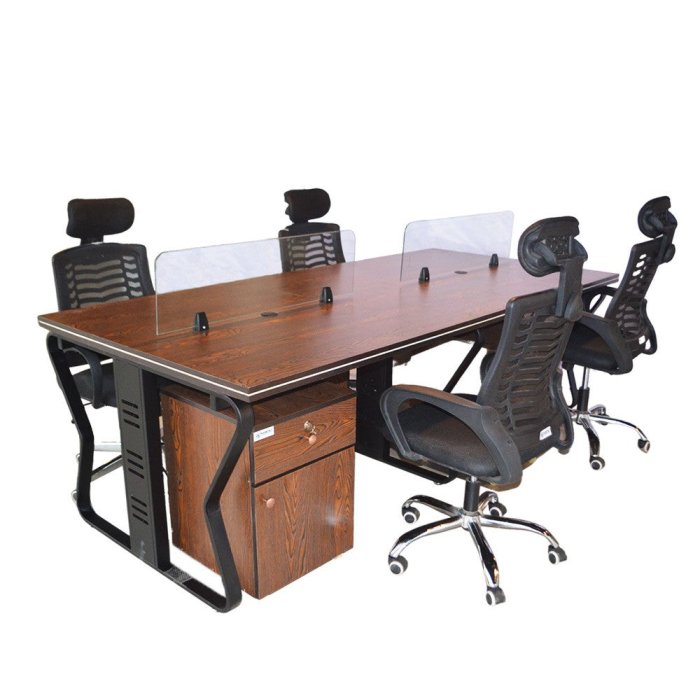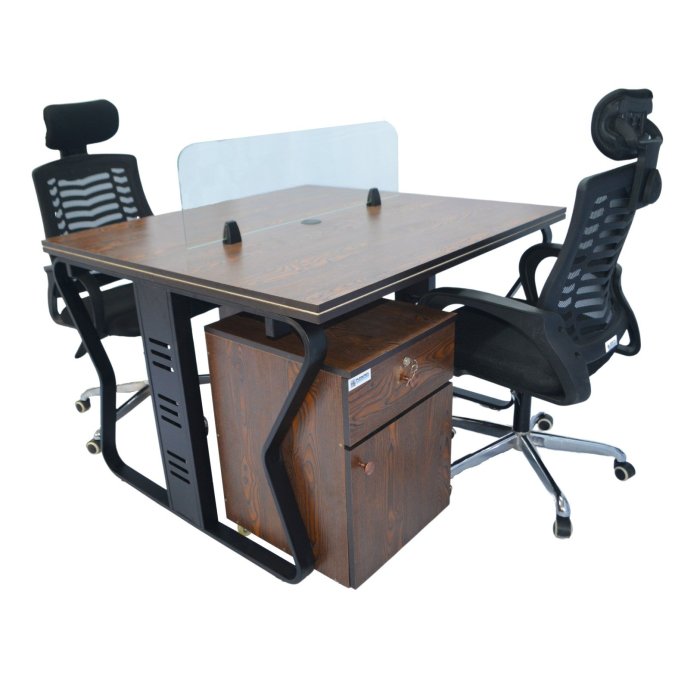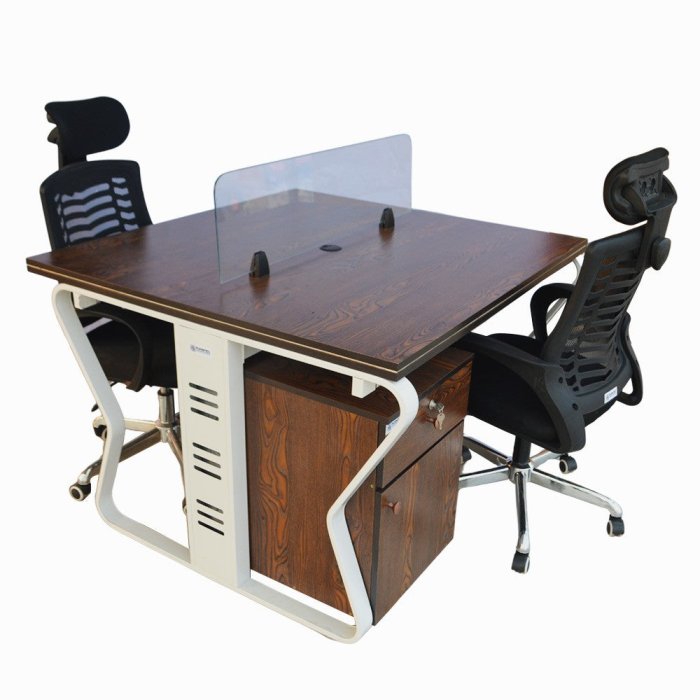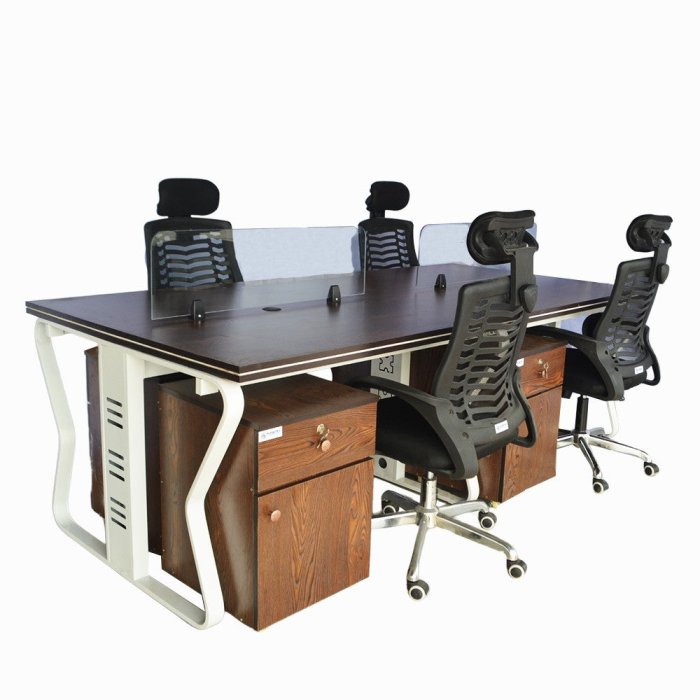
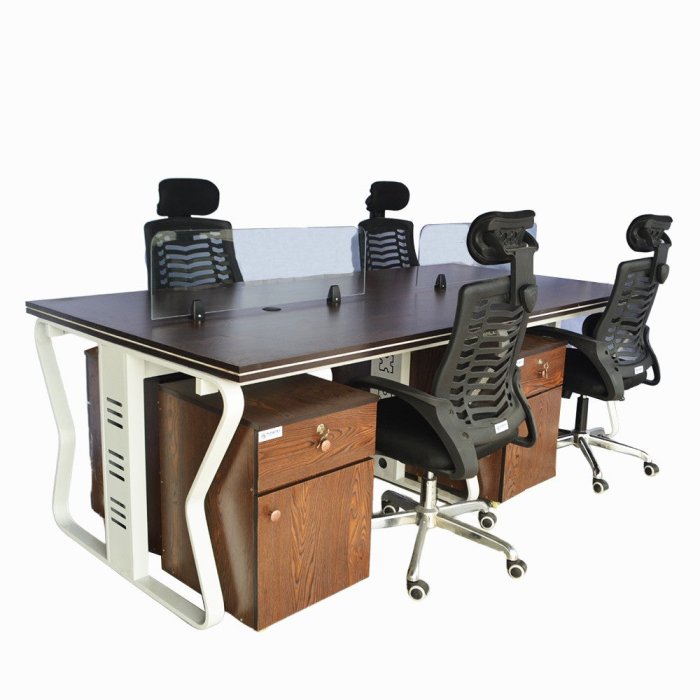
Workstation Office Table for 4 Person with Front Table(FT-002)
44928 tk 44928 tk
প্রোডাক্ট কোড: 602
| ঢাকার ভিতরে ডেলিভারি | ৳ 60 |
| ঢাকার বাইরে ডেলিভারি | ৳ 130 |
পন্যের বিবরণ
Spacious 4-Person Workstation Table with Front Table
The FT-002 is a practical office table built for teams working side by side. With seating and desk space for four people, it's designed to fit standard office layouts and support the daily workflow of a small work group. Whether you're setting up a startup office, a department workspace, or a shared studio, this table gives you the footprint and layout you need without unnecessary bulk.
The front table section provides additional work surface in front of the main desk run, making it ideal for reception tasks, document handling, or client-facing work. This extra counter height or work plane keeps frequently accessed items and tasks separate from the main seating area.
Build and Structure
This workstation is engineered for stability and daily heavy use. The frame is built to handle the weight of multiple users, computers, monitors, keyboards, and office supplies throughout the working day. The table maintains a level surface even when desks are loaded with equipment and materials. Joints and connections are reinforced to avoid wobble or shifting over months of constant use.
The four-person layout allows independent work positions, so each user has their own defined space at the desk. This separation reduces accidental bumps, cable tangling, and workspace conflict. Each position can accommodate a standard office chair and personal workspace setup.
Sizing and Desk Dimensions
The FT-002 is sized to fit a standard office room or work area without dominating the space. At full four-person width, it takes up a realistic footprint for small to medium offices. The depth is measured to allow comfortable reach to office equipment—monitors, keyboards, and desk accessories sit within easy arm's length of a seated user.
The front table is proportioned to serve as a secondary work surface without extending the overall depth too far into the room. Its height and width let staff stand comfortably while completing tasks or interacting with visitors at the desk edge. The design balances usable surface area with practical room layout.
Daily Use and Workplace Practicality
In daily office use, this table handles the rhythm of a working team. Users can sit for focused work, stand at the front section for quick tasks, and move between positions without crowding a single desk. Cable management is straightforward—the structured layout means wiring for multiple computers can be routed cleanly underneath or along the frame sides.
Cleaning and maintenance are simple. The flat surfaces collect dust and spills can be wiped clean without disassembling the table. If a chair needs moving or a user shifts position, the table's stable frame means the whole structure doesn't shift or require re-leveling. Over a working day with four staff members moving in and out, the table stays solid and reliable.
Setup and Delivery
The FT-002 is built as a complete unit ready for your office floor. Assembly time is minimal—the frame arrives largely pre-assembled, and installation in your workspace takes straightforward steps. Legs are typically adjustable, so you can level the table on uneven floors, a common situation in Bangladesh office spaces. Once positioned, it requires no tools to adjust for daily use.
চার জনের জন্য কর্মক্ষেত্র অফিস টেবিল
FT-002 টেবিল একটি ব্যবহারিক অফিস টেবিল যা চার জন কর্মচারীর জন্য ডিজাইন করা হয়েছে। এতে একটি মূল ডেস্ক এবং সামনে একটি অতিরিক্ত টেবিল রয়েছে যা রিসেপশন, ডকুমেন্ট হ্যান্ডলিং বা ক্লায়েন্ট সেবার জন্য আদর্শ। যখন আপনার অফিসে একাধিক কর্মচারী একসাথে কাজ করতে চান, তখন এই টেবিল সবার জন্য আলাদা কাজের জায়গা নিশ্চিত করে। প্রতিটি ব্যক্তি তাদের নিজস্ব চেয়ার, কম্পিউটার এবং ডেস্ক সামগ্রী সহ স্বাচ্ছন্দ্যে বসতে পারে, এবং একজনের কাজ অন্যজনের কাজে বাধা দেয় না।
এই টেবিলের কাঠামো দৈনিক অফিস ব্যবহারের জন্য শক্তিশালী এবং স্থিতিশীল। একাধিক ব্যবহারকারীর ওজন, কম্পিউটার মনিটর, কীবোর্ড এবং অফিস সরঞ্জাম রাখার জন্য এটি নির্মিত। টেবিলের পৃষ্ঠ সারাদিন সমতল থাকে এবং কোনো কাঁপুনি বা সরানো হয় না। কেবল পরিষ্কার করাও সহজ—ধুলা মুছে ফেলা যায় এবং যেকোনো ছিটে পানি দ্রুত পরিষ্কার করা যায়।
সেটআপ এবং ইনস্টলেশন সরল এবং দ্রুত। টেবিলটি সম্পূর্ণভাবে প্রি-অ্যাসেম্বল করা অবস্থায় আসে এবং আপনার অফিসে স্থাপন করতে বেশি সময় লাগে না। পা সমন্বয়যোগ্য, তাই অসমান মেঝেতে টেবিলটি সঠিকভাবে স্তরযুক্ত করা যায়—এটি বাংলাদেশের অনেক অফিসে একটি সাধারণ প্রয়োজন। একবার স্থাপন করলে, দৈনন্দিন ব্যবহারের জন্য কোনো সরঞ্জাম প্রয়োজন হয় না।