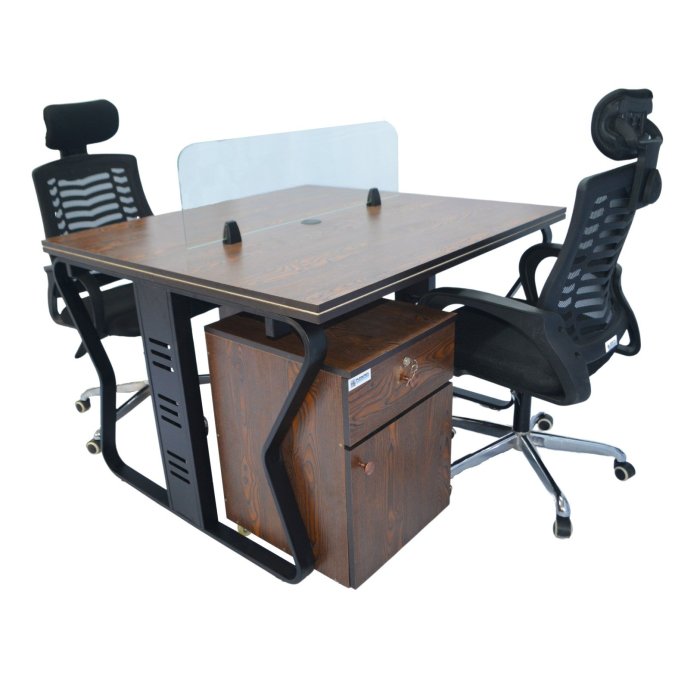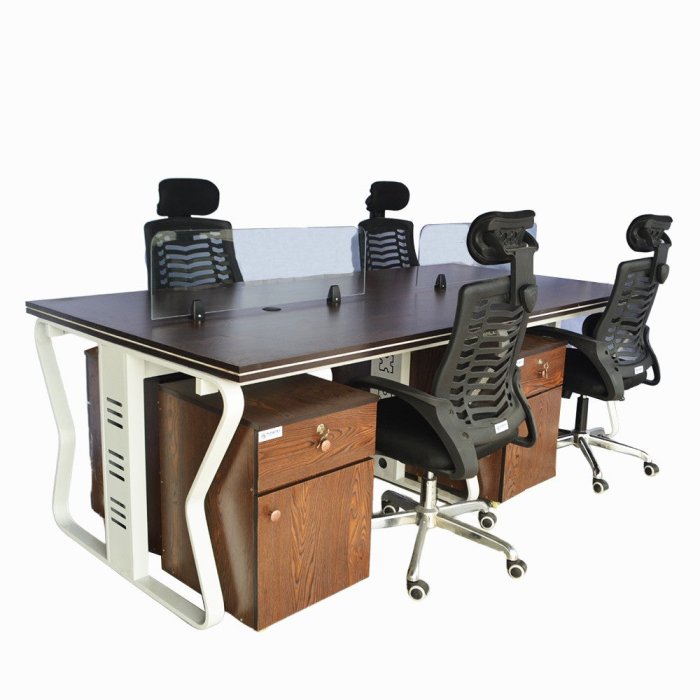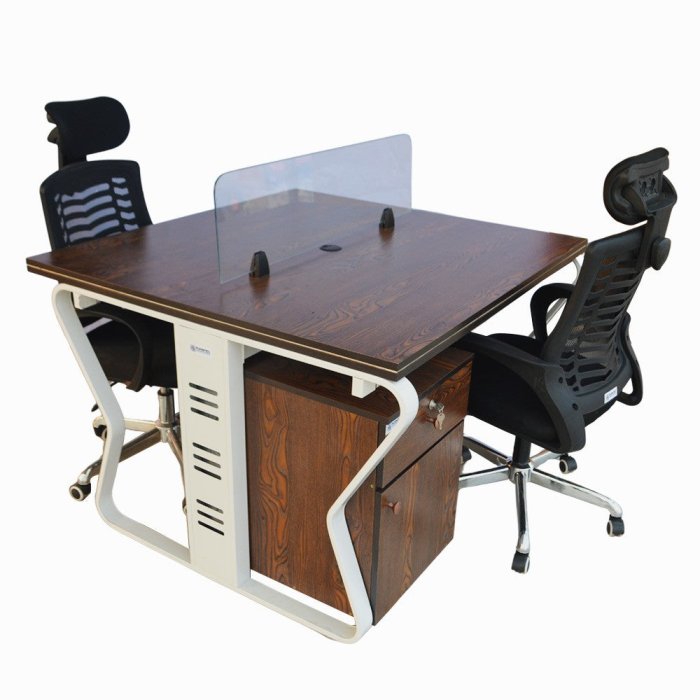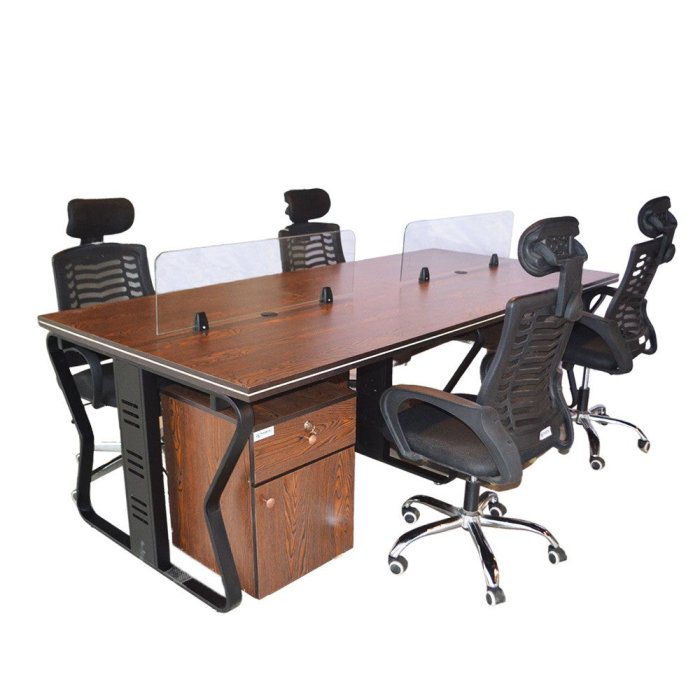
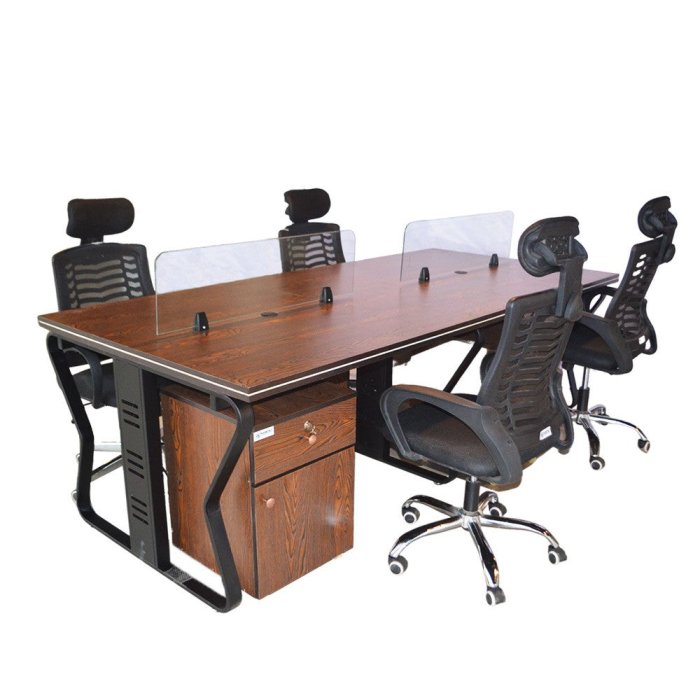
Workstation Office Table for 4 Person with Front Table(FT-004) Black
44928 tk 44928 tk
প্রোডাক্ট কোড: 639
| ঢাকার ভিতরে ডেলিভারি | ৳ 60 |
| ঢাকার বাইরে ডেলিভারি | ৳ 130 |
পন্যের বিবরণ
Four-Person Workstation Layout and Build
The FT-004 is a purpose-built workstation designed to seat and support four office workers in a single integrated desk structure. This arrangement works well in small to medium offices, shared workspace areas, or open-plan layouts where you need multiple team members within arm's reach of each other. The table is constructed as one continuous frame, so all four users share a stable base rather than sitting at separate desks.
The frame is built in black finish, which suits most office environments and hides dust and minor marks better than lighter colors. Four separate work surfaces give each person their own dedicated space without the visual clutter of individual desk units spread across the room.
Front Table Integration and Workflow Support
This workstation includes a front table component (FT designation), which serves as an additional work surface positioned forward of the main desk plane. In a four-person setup, this front element can function as a shared receiving point for documents, a monitor stand placement, or a secondary work area that the team rotates through during the day. It breaks up the monotony of a flat-plane desk and gives flexibility to how the workspace is used.
The front table is useful for keeping frequently needed items within easy reach—reference materials, input devices, or small equipment that four people need to access without reaching across their main work surface. It also provides visual separation between the individual stations, giving each worker a sense of personal desk territory.
Sizing and Workspace per Person
With four separate work zones built into one frame, each person gets a defined footprint of the overall table length. This is ideal for situations where workers need to sit close together for collaboration, but still maintain clear personal work boundaries. The depth is standard office depth, which means monitors, keyboards, and documents sit comfortably without requiring workers to lean forward or reach awkwardly.
The sizing works well for typical office tasks: computer work, paperwork handling, note-taking, and light material organization. Each station has enough surface area for a desktop monitor setup (or dual monitors for taller desks), keyboard, mouse pad, and a small personal work zone for papers or reference materials. The footprint is compact enough that four people don't feel cramped, but spacious enough that elbows don't clash during the working day.
Daily Use and Workplace Durability
A four-person workstation is built for constant use. The black finish is practical for high-traffic office settings where the desk gets bumped, leaned on, and used by multiple people throughout each working day. The integrated frame design means there are no separate legs or joints that can become wobbly over months of shared use.
This table is suited to offices where people spend most of their day seated at the desk—data entry, software work, design, writing, customer service, or administrative roles. The shared footprint encourages communication between team members and makes it easy for supervisors or leads to monitor work progress or provide quick guidance. It also simplifies cable management and power outlet planning, since all four stations draw from the same table infrastructure.
Assembly, Placement, and Space Considerations
Before ordering, measure the floor space where this table will sit. A four-person desk takes up roughly the equivalent floor area of two large individual desks. Plan for chair clearance on all sides—each person needs space to pull their chair in and out, and you need walking room behind the stations. The black color makes it a visual anchor in the room, so consider how it aligns with doorways, windows, and existing office furniture.
Assembly is a multi-person job. The frame and top sections should be assembled on-site by someone familiar with office furniture setup. Keep the floor clear for at least a few hours during assembly. Once installed, the workstation is stationary—moving it later requires the same disassembly effort, so placement decisions are worth making carefully from the start.
চার জনের অফিস ওয়ার্কস্টেশন - FT-004 ব্ল্যাক
FT-004 একটি সম্পূর্ণ একীভূত ওয়ার্কস্টেশন যা চারজন কর্মচারীকে একটি সিঙ্গেল ডেস্ক ফ্রেমে বসার জন্য ডিজাইন করা হয়েছে। এই ধরনের টেবিল ছোট অফিস, শেয়ারড ওয়ার্কস্পেস, বা ওপেন প্ল্যান লেআউটে অনেক কার্যকর যেখানে একটি টিম পাশাপাশি কাজ করে। প্রতিটি ব্যক্তি তাদের নিজস্ব ডেডিকেটেড ওয়ার্ক সারফেস পায়, অথচ চারজনই একই ডেস্ক স্ট্রাকচারের অংশ থাকে। ব্ল্যাক ফিনিশ সব ধরনের অফিস এনভায়রনমেন্টে ভালো লাগে এবং দৈনন্দিন ব্যবহারে দাগ ও ধুলো লুকিয়ে রাখে।
FT (ফ্রন্ট টেবিল) কম্পোনেন্ট মেইন ডেস্কের সামনে একটি অতিরিক্ত ওয়ার্ক সারফেস প্রদান করে। চার জনের সেটআপে এই ফ্রন্ট এলিমেন্ট শেয়ারড ডকুমেন্ট রিসিভিং পয়েন্ট হিসেবে কাজ করতে পারে, মনিটর স্ট্যান্ড বসানোর জায়গা দিতে পারে, বা একটি সেকেন্ডারি ওয়ার্ক এরিয়া হতে পারে যা টিম দিনের মধ্যে ঘুরে ব্যবহার করে। এটি প্রতিটি ব্যক্তির ব্যক্তিগত ডেস্ক টেরিটরির অনুভূতি তৈরি করে এবং অতিরিক্ত ফ্লেক্সিবিলিটি দেয়।
দৈনন্দিন অফিস কাজের জন্য—ডেটা এন্ট্রি, সফটওয়্যার ডেভেলপমেন্ট, ডিজাইন, লেখা, কাস্টমার সার্ভিস, বা অ্যাডমিনিস্ট্রেটিভ রোল—এই ওয়ার্কস্টেশন প্রতিদিনের ব্যবহারের জন্য তৈরি। প্রতিটি স্টেশনে একটি ডেস্কটপ মনিটর সেটআপ, কীবোর্ড, মাউস প্যাড এবং ব্যক্তিগত ওয়ার্ক জোনের জন্য যথেষ্ট জায়গা রয়েছে। ইন্টিগ্রেটেড ফ্রেম ডিজাইন মানে কোনো আলাদা লেগ বা জয়েন্ট নেই যা শেয়ার্ড ব্যবহারের সাথে সাথে দুর্বল হয়ে যেতে পারে। টিম মেম্বারদের মধ্যে কমিউনিকেশন সহজ হয় এবং সুপারভাইজার বা লিডরা কাজের অগ্রগতি মনিটর করতে পারে।